
The FRANK SINATRA COOKBOOK
The Sinatra Family Cookbook? Well, not exactly, just the closest thing to it. There was actually a book called The Celebrity Cookbook, and it was so incrediably awful that it's criminal. How can anyone who was colaborating with Frank Sinatra, on a so-called cookbook produce utter garbage. You don;t even know who wrote the book. There's no listing of an author, just that it's Barbara SInatra and Friends. Was she the author. No doubt there was a book editor who put the thing together. Whoever the people are that had the incrediable opportunity to work on a cookbook with Frank Sinatra and do such a God Awful job of it, those people should be arrested and thrown in jail. The book is absolutely horrible. You have the great subject of Frank Sinatra, and the food he liked to eat, it there are no stories or elaborations of Sinatra Family Meals, dining out, nor any history or facts at all. Not even a single sentence. This is without a doubt one of the greatest crimes incookbook, and publishing history of all time. It's so horrible, it's almost unbelievable, but it actually happened. Barbara Sinatra and the people who helped her, produced one of the worst peices of crap ever to be puiblished, in the form of The Frank Sinatra Celebrity Cookbook. What a crime.
Well, sad to say, t there is not much written on Franks Sinatra eating habits, dishes his father Marty made, and his mother Dolly. Thouhg it is said that Marty Sinatra was the better cook, and cooked most of the family meals, which would have been Sicilian, and dishes from Marty (Saverio Martino) whoe was born in Lercara Friddi Sicily, before his family immigrated to New York in 1903 ...
Those people, Barbara Sinatra and Friends had a chance to write something great, but failed miserably. They had a chance to talk to Frank, get all the stories of Frank Sinatra, the foods he loved, what his father and mother cooked, as well as dining adventures in New York, Chicago,
Los Angeles, Italy, all around American and the World. The did not even write one paragraph, not even one sentence on anything. Again it's an absolute crime that the people behind this book were ever given the go ahead.
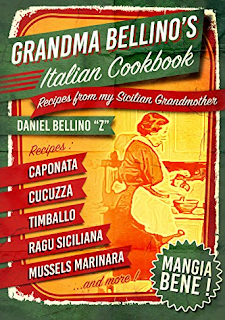
Anyway, since those people failed so terribly, the closest thing we can find, other than a few tidbits in magazine articles here and there, the best thing we could find, as far as a cookbook and Frank Sinatra, food and Italian and Sicilian Recipes, is a book by Daniel Bellino Zwicke, called Grandma Bellino's Italian Cookbook - Recipes From My Sicilian Grandmother. The authors maternal grandparents, his grandfather Philipo Bellino and his nonna Giuseppina Salemi Bellino of Lercara Friddi, Sicily, the same town that both Charles "Lucjy" Luciano and Frank Sinatra's father
Saverio Antonino Martino Sinatra was born. Martino (Marty) learned how to cook the Sicilian dishes of Lecara Friddi from his mother and a couple of his aunts. Marty was quite the cook, and cooked most of the Sinatra Family meals that young Frank and Dolly Sinatra ate. Dishes like : Eggplant Caponata, Ziti al Forno (with Meatballs), Timballo d' Agneletti, Zuppa di Lentichie, and various pasta, soup, Chicken, MEat and Fish recipes. We found the recipes from these dishes, the same that Marty SInatra cooked for his wife and son Francis Albert, in Grandma Bellino's Italian Cookbook.
So ther you go. If you want to know a bit about Frank Sinatra, and the Sicilian Food that he like to eat, get Grandma Bellino's Italian Cookbook, what we like to call The Sinatra Family Cookbook. It's the best you can do. So get a copy, ook some recipes, put on some Sinatra albums, sit down at the table, and "Eat Like Frank."

The SINATRA CELEBRITY COOKBOOK
BARBARA SINATRA & FRIENDS
"IT'S a CRIME THIS BOOK Was EVER PUBLISHED"
SOrry to say, but This BOOK is ABSOLUTELY TERRIBLE !!!
Witha CAPITAL "T"
So UNWORTHY of The LATE GREAT FRANCIS ALBERT SINATRA
"BASTA" !!!
The REAL SINATRA COOKBOOK


ABOUT FRANK
Frank was an Italian-American whose ancestry is from Genoa on his mother's side of the family and Sicilian on his father's side. And being Italian, Frank loved the food he grew up with, Dolly made a mean Marianara Sauce as well as Meatballs and the all-time Italian-American favorite Sunday Sauce (aka Gravy). Frank loved the food of his childhood; the Spaghetti & Meatballs, Stuffed Artichokes, Pasta Fazool, Frittata, Eggplant Parmigiana and all the usual suspects of the Italian-American table.
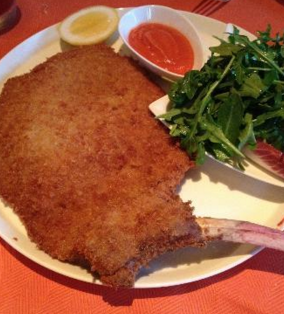
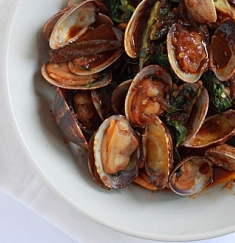
It's a well known fact that Frank's favorite restaurant was Patsy's on 56th Street in New York ... When Frank went to Patsy's his favorite dishes were Calms Posillipo and Veal Milanese with a nice plate of Spaghetti Pomodoro in-between, and maybe a slice of Cheesecake to finish if Frank was in the mood.

FRANK and AVA
"MANGIA BENE"

FRANK'S FAVORITE RESTAURANT

GINO'S on Lexington Avenue was a Sinatra favorite ..
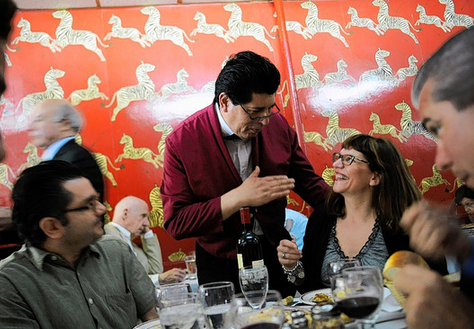
A waiter and the famed Zebra Wallpaper of Gino's ..

FRANK and AVA
"MANGIA BENE"
FRANK'S FAVORITE RESTAURANT
Patsy's 56th Street, NEW YORK, NY
VEAL MILANESE and CLAMS POSILLIPO .. Two of FRANK'S Favorites
CLAMS POSILLIPO
"One of FRANK'S FAVORITES" !
SICILIAN FOOD RECIPES
FROM LERCARA FRIDDI
The SAME TOWN as The SINATRA FAMILY
SICILY
GRANDMA BELLINO'S COOKBOOK
RECIPES FROM SINATRA'S HOME TOWN in SICILY
SOUPS - PASTA _ EGGPLANT - ARTICHOKES & MORE
All of FRANK SINATRA'S FAVORITE ITALIAN FOODS
GINO'S on Lexington Avenue was a Sinatra favorite ..
A waiter and the famed Zebra Wallpaper of Gino's ..
Learn How to Make SUNDAY SAUCE alla SINATRA
.


